Desperate Times Call for Desperate Measures

The Covid-19 crisis has caught the world unawares, and across levels – individual, organization &r nation, private or government run – everyone has borne the brunt of this unprecedented situation. The silver lining is that our response to the situation is based on survival instinct, which is bringing together the best of innovation, co-operation, effort and speed. The corporates world over are figuring out ways to deal with this crisis and learning fast to cope with its fall-out. Depending on the industry, business size, and location, the impact of the current situation has varied between mild and drastic for the majority of the companies. One of the immediate reactions from the industry is to go for direct cost reduction especially employee wages apart from usual indirect cost saving exercises like travel and training cost reductions. In our observation, many organizations have already implemented ‘pay cut’ for middle-level and senior employees. In addition, some have implemented or contemplating with idea of ‘furloughs’ or ‘forced leaves’. As the subject of organization efficiency and productivity interests us, we reached out to CHROs of about 25 organizations to better understand their responses to this situation. Beyond these two prevalent options, very few organizations have perhaps looked at other opportunities of wage-cost efficiency in both short-term and long-term. There are multiple potential triggers for this approach : a) pressure from CEOs to act immediately to show immediate savings within quarterly performance.b) benchmarking and keenness to follow trend based on competitors or market action.c) lack of awareness or effort to explore other aspects (vs using tried and tested method). In our research, almost 3/4th of the group of companies studied are focusing on short-term, immediate gains on wage costs. Though they recognize the importance of long-term wage efficiency and productivity, the ‘urgency’ of action is taking priority over ‘importance’. In a classical urgency-importance matrix, this is understandable in current situation. However, as situations starts improving, some of us may lose sight over ‘important’ aspect of long-term actions and get busy with other priorities. Based on our analysis, following are our recommendations on short term and long term actions on cost containment: – Workforce management – its composition, its mix – fixed vs contractual vs flexi/part-time vs gig/freelance– Compensation mix – pay structure, pay mix – fixed vs variable pay, incentive designs, deferred payments, stock plans.– Benefits structure – benefits types, structure, flexibility and getting value out of money spent– Employability schemes – Effectively utilizing government schemes to train and augment workforce We look forward to any comments and suggestions and sharing of best-practices. We are also happy to discuss with any professionals/organizations who may want to dig deeper into this discussion to explore optimum solutions for them.
Why diversity matters?

Did you know – In India, the situation is even worse. Gender disparities in the country are rooted in socio-economic realities, that cause survival, safety, education and economic inequalities between genders. Over the past decade, the number of women across levels especially leadership levels has grown, but they continue to be under-represented. Before we get into the why and how behind the current situation, let’s first address the question – is gender diversity important for an organization? McKinsey has been conducting continued research on the subject, and the results of their research have repeatedly shown that diversity, inclusion, and performance go hand in hand. Over the past five years, the likelihood that diverse companies will out-earn their industry peers has grown. So have the penalties for companies lacking diversity. Similarly, their previous research found that women tend to demonstrate, more often than men, five of the nine types of leadership behaviour that improve organizational performance. Women also more frequently apply three of the four types of behaviour—intellectual stimulation, inspiration, and participative decision making—that most effectively address the global challenges of the future. Furthermore, diversity in any form, gender included, brings in varied ideas on the table, bringing about new problem solving experiences. Example – Several reports have shown that in the 2008–09 global financial crisis, banks with a higher share of women on their boards were more stable than their peers. This research also suggests that banks run by women might be less vulnerable in a crisis.2 We are witnessing now that cities and countries with women leaders are thought to be facing the COVID-19 pandemic more successfully than those without them.3 It may be, as a McKinsey research suggests, that female leadership has a trust advantage giving women the edge in certain crisis situations. Now that we have established why it makes business sense to pay adequate attention to a healthy balance in the genders they employ, let us take a look at how can we do that. Over the past decade, we see a lot of companies talking about efforts in the diversity and inclusion space. Yet the progress remains sluggish. Some of the steps that could work favorably in this direction would be 1. Include your managers in the discussion. Get their buy-in on why this is relevant and critical for the organization. Inclusion and a fair voice & opportunities for all should not be seen as a challenge by the majority.2. Identify, accept and work on the biases. While some biases we may be aware of at an individual level, some others could be unconscious biases. It is critical for organizations to set up systems in place to check the biases that could come up in decision making.3. Devise robust redressal systems. According to HBR, approximately half of all discrimination and harassment complaints lead to some type of retaliation..4. Work with data. Look at gender data over a period of time for your own organization, and compared to your peers to get an understanding of the progress that you have made, and the work that still needs to be done.5. While there has been enough talk about glass ceiling faced by women, it is typically understood as something that prevents women from reaching the top levels in an organization. A study conducted by leanin.org suggests that the biggest obstacle that women face is the first step up to manager, or the “broken rung.” This broken rung results in more women getting stuck at the entry level and fewer women becoming managers. As a result, there are significantly fewer women to advance to higher levels. To get to gender parity across the entire pipeline, companies must fix the broken rung.6. Mentor young women. Especially so by senior women at workplace, who understand the challenges of being the underrepresented gender at work.7. Build flexibility into the job. Provide suitable flexible working options and arrangements for maternity and child care. Encourage men in your organization to take advantage of family friendly policies to provide a balanced work environment at work and home.8. Learn from success stories. Understand how companies that have been successful in taking advantage of the diversity story have made it possible for themselves. Ultimately, everyone gains with inclusion – socially, psychologically and economically.1 Leanin.org2 David Lipton, Boosting Growth Through Diversity in Financial Leadership, IMF3 Tomas Chamorro-Premuzic, Are Women Better At Managing The Covid19 Pandemic?, Forbes
Harnessing social media for effective utilisation in pandemic
Over the past two decades, three novel coronaviruses — SARS (severe acute respiratory syndrome) in 2002, MERS (Middle East respiratory syndrome) in 2012 and now 2019 Covid19 — have emerged, with both health and economic consequences around the globe. As the public looks for information and scientists rush for answers, advances in social media and technology have offered some good, some bad pockets of information. But I believe it’s largely more beneficial to the society. With the use of Twitter, Skype, WhatsApp and bioRxiv (a website where scientists can upload their scientific papers for public review), clinicians, virologists, bioinformaticians (biologists who work with big data) and epidemiologists from around the world have focused and co-ordinated their efforts to fight the outbreak and contain its spread. One private Facebook created by Dr. Kabir Rezvankhoo (an E.R. and intensive-care-unit doctor) reserved for doctors who have or are likely to care for critically ill patients with Covid-19. The group quickly grew to nearly 15,000 members. The reason Dr. Rezvankhoo created the group, was simple: “Because information on the new coronavirus is difficult to come across.” Another Covid-19 Facebook group which is less restrictive and intended for all health care providers, has more than 100,000 members. The group’s administrator says hundreds of posts come through every hour. The World Health Organization, “Safe Hands Challenge” has turned the Switzerland-based entity into probably the most important influencer on Earth right now. The WHO, a 71-year-old organ of the United Nations, is consistently putting out life-saving information. And it’s doing so in a way that successfully catches the attention of both those likely to heed patrician authority, as well as the young people who form the core consistencies on the outlets that the WHO is increasingly focused on: Twitter and TikTok. It’s also on Facebook and LinkedIn. The Safe Hands Challenge, for instance, has been used as a TikTok hashtag nearly a half billion times in 48 hours. The WHO posted its first video to TikTok in beginning of March 2020 and has since added nine more. They’ve been viewed an average of 10.3 million times. The WHO has 448,000 followers on TikTok, 2.3 million on LinkedIn and close to 6 million on both Twitter and Facebook. In real life, people have checked into its Geneva headquarters nearly 54,000 times using its Facebook page. Today, many methods of sharing information have been subsumed by giant social media platforms that have incredible speed, reach, and penetration. More than 2.9 billion individuals use social media regularly, and many for long stretches of time. Current understanding of how these platforms can be harnessed to optimally support emergency response, resilience, and preparedness is not well understood. In this Viewpoint, a framework for integrating social media as a critical tool in managing the current evolving pandemic as well as transforming aspects of preparedness and response for the future by government bodies and global health organisations is given below. Awareness creationOf course it all starts with awareness creation to masses in a regularised way to make people to understand how and where to see for authentic information and the dos and don’ts in using Social media responsibly Directing People to Trusted Sources It’s time for social media platforms to take on an active public health role and in parallel use banners, pop-ups, and other tools to directly message users about hand washing and social distancing. This approach increases the likelihood of millions of people seeing the same messages whenever they access the platform, even if they forgo accessing the WHO website or other trusted sites. Counteracting Misinformation Unlike any prior event, WHO has identified that the “the 2019-nCoV outbreak and response has been accompanied by a massive ‘infodemic’—an over-abundance of information—some accurate and some not—that makes it hard for people to find trustworthy sources and reliable guidance”. Research is needed to better understand the origins and spread of misinformation as well as coordinated efforts to disrupt its sources and identify, remove, and reduce its dissemination. Social Media as a Diagnostic Tool and Referral System Social media should be used to disseminate reliable information about when to get tested, what to do with the results, and where to receive care. If a vaccine becomes available, the same platforms could be used to encourage uptake and address challenges associated with vaccine hesitancy. These targeted efforts can occur in response to what people search for or in a more personalized approach based on an individual’s online profile, posts, and underlying risk. Social media platforms are well poised to enable users to remotely assess symptoms and determine their most appropriate course of action. Enabling Connectivity and Psychological First Aid As individuals start to self-quarantine and telecommute, new forms of social isolation are occurring. In some places in the US, funerals, weddings, religious services, in-restaurant dining, and other places of traditional socialization have already been severely limited or completely restricted. The long-term effects of social distancing and isolation will likely affect populations differently, necessitating comprehensive strategies for addressing the downstream sequelae. Navigating social isolation will be particularly challenging for already disadvantaged populations, such as older individuals, individuals with low socioeconomic status or housing insecurity, individuals managing chronic illnesses or disabilities, and individuals who are undocumented. Social media should be used to raise awareness about the needs of these groups in disasters and for development of new methods for communities to mobilize resources and support in the absence of physical contact. The “crisis response,” “safety check,” and related functions available on some social media platforms could enable more frequent status updates and sharing.8 Psychological first aid could be delivered through chatbots that use artificial intelligence to learn from the millions of interactions that are occurring in response to the pandemic and better understand critical needs. While social media cannot replace in-person contact, there may be ways to better use it to support recovery and resilience. Advancing Remote Learning New approaches to enhance the education of health care professionals is needed. Social distancing will affect clinical training (eg, emergency department rotation) and didactic education (eg, anatomy laboratory). Stand-alone
Is work-from-home as ‘new normal’ a myth?

There is no denying the fact that Covid-19 has impacted all aspects of our life. It has not only caused major disruptions in our professional life or workplace norms but also impacted our social interactions, family and personal life. Anywhere in the world, no one can claim to be completely untouched by this new reality which has hit us hard like Tsunami without giving enough time to prepare and react. On work front, there are many views being shared by experts on how this change will permanently impact our working conditions, norms, expectations and create a ‘new normal’. As one goes through debates, webinars or panels, there are many endorsements to the view that ‘work from home’ is going to be the new norm and ‘office working’ seems like an old practice. Understandably many organizations, including my employer, have been practicing WFH earlier too and they already have some policies around this arrangement. Some companies which have been resisting even the concept of WFH, are forced to experiment now, even if reluctantly. For some, it has been a pleasant discovery that work can be performed from home without loss of productivity. Moving further, there are some companies which are revisiting their post-Covid workforce deployment model with implications leading to potential drop in commercial real estate demand. Some business leaders have also made bold statements on this aspect so, undoubtedly, there is a real paradigm shift. So, is this is a ‘new normal’? Have we reached the conclusion that WFH will be a sustainable new model in post-Covid area? No doubt, we adopted this new norm quickly and it will increase and stay, but I’m still pondering over few thoughts here:a) Is this change permanent in nature?b) Will human beings change their behavior and habits permanently after the crisis gets over?c) Will organization dynamics, undercurrents and politics let this happen on long term basis?In my view, we may still be quite distant from the conclusion of ‘permanency of a wide-spread WFH’. Here is my perspective on these aspects: Employee considerations: Humans beings are complex and they don’t behave same way alike. There may be a temporary alignemnt to group dynamics or herd mentality during crisis but they have different individual needs, wants, aspirations, compulsions and barriers. As soon as crisis gets over, they may start attaching value to individual priorities more than the system or norm. Human beings are social by nature. We may need to observe – how many employees can stay satisfied working from home for ever, not meeting other fellow team members and not having water cooler conversations? If we observe in many offices, employees tend to ‘hang around’ even after working hours spending time playing TT, carrom, gym etc. There is a big social element in having a tea at cafeteria or even stepping out for a smoke break. Moreover, some employees get their own ‘me time’ which they get pre/post office time or while commuting. They may miss it completely staying at home permanently and getting absorbed in daily chores. The assumption that almost all employees would like to trade it off completely with WFH seems a little far-fetched. One often ignored aspect is the lack of basic infrastructure at employee’s home. Except for some middle-level and senior employees, how many employees can afford to keep a room occupied by one member of family (worse if both spouses are working) for official work. It may get even more challenging if any family member is in shift-working. A typical middle-class family may have at most 2-3 rooms house where even joint family might be staying together. To add to misery, there may be frequent power cuts or changeovers, internet challenges etc. Many employees may prefer working in comfortable AC environment in office rather than juggling with multiple issues at home on daily basis. Organizational Aspects:One important organizational aspect is manager’s need for ‘power’. In corporate world, at many places, politics revolve around a cabin allocation or workstation or the sense of power where managers love the employees asking for permission for going home early – how will that need be fulfilled? In a very empowered virtual meetings environment, there may still be a large set of power-hungry managers who may be feeling anxious by sense of losing power or control. Many of them may influence organization’s policy decisions to help them gain their ‘control’ back. It has been quite evident in several instances of managers taking first opportunity to call all employees to work location wherever government eased out lockdown norms. Another dimension to the situation is that a large quantum of work can only be done from offices, worksites or teams working together in physical proximity. While WFH may be a good option for some roles or industries like IT, ITES and even corporate offices, a large percentage of workforce works in other sectors. If we consider all industry sectors – say chemicals, pharma, real estate, manufacturing, sales and distribution, logistics etc.…how many employees can actually WFH? If it’s a small population that can potentially WFH, is it really a prevalent ‘new norm’ or is it more of a Corporate offices and IT/ITES dominated norm that is overshadowing the general perception? In recent past, we have observed airlines business bouncing back after 9/11 or airline crashes. People tend to come back to their normal ways of working once perception of threat goes down. As Covid-19 threat perception goes down, we might experience similar comeback. Already, people have started roaming around in markets wherever relaxations are given by government. There is caution everywhere but the social activities have been increasing with change in Covid-19 threat perception as we started understanding it little better.As the nature tries to attain equilibrium after chaos, the new equilibrium gets attained according to a situation or in response to a situation. Once the disruption is removed, it may again try to reach another equilibrium which would be displaced from the earlier one. But the quantum of displacement may depend a lot on the
HR Professionals, Spur your growth by Leaps and Bounds!
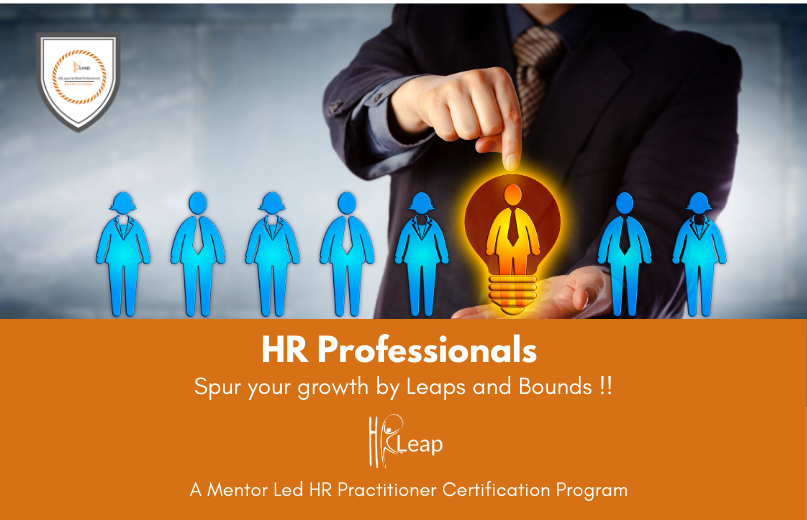
Nature orchestrated a world disruption in the guise of a pandemic which nobody saw coming. Things moving on their natural course of evolution have been suddenly thrown out of gear. Businesses have been catapulted from tried and tested ways of operating into completely uncertain operating environments. All aspects of business operations have got affected including the HR domain. Every department is undergoing intense transformation, can HR be left behind? With the economic scenario showing signs of improvement with HR taking a centerstage, HR policies and long-term roadmaps will play a pivotal role to power this revival and growth. In fact HR has been a key player in rejuvenating several organizations and bringing them back on line. HR practitioners will have to find innovative and viable ways to prepare the workforce including the digital nomads of today from such future disruptions or black-swan events. All the present-day requirements are being looked at in a new light of Covid experience forcing HR practitioners to identify gaps in their learning. It is time to unlearn redundant practices and embrace HR 3.0. They have to integrate new age skills like design and strategic thinking, agile HR and data analytics etc. along with their generalized core competencies, to help them traverse and navigate through this new age roadmap. By undergoing a rapid digital transformation, HR tech has been able to perform wonders in preventing corporates to slip into an irreversible crisis. The traditional training and courses of HRM though built on sound conceptual and theoretical knowledge seldom provide enough experiential focus or industry connect for it to make the candidate industry ready and meet real life challenges at the workplace. Core HR fundamentals are often not developed in the way that the learnings can be immediately transferred to the workplace. This gives rise to significant gaps in application. Conventional training programs do not realise the extreme importance of mentorship, thus either completely overlook it or place lip service to it in order to meet marketing requirements. Moreover the aspiring HR practitioners miss out on gaining immense benefits from the experiences of a mentor and getting guidance at various stages of career. Mostly, the trainers delivering the course in many instances are themselves not practicing HR professionals. This may lead to the practitioners to be far removed from the real challenges and nuances of very rapidly evolving industry expectations. The young professionals are often not equipped to be equal partners to other strategic players and are often relegated to the side-lines. Thus, HR has mostly been traditionally considered as a supporter and an enabler, seldom a key player in the strategic business decision making. But that is all evolving rapidly now. With HR moving up the value chain to keep the business not only sustainable but also profitable, the millennials of today have the opportunity to lead from the front tomorrow as business strategist. Their role and responsibilities are undergoing a very fast paced transformation and HR practitioners are increasingly involved in solving organizational strategic and tactical problems on a day to day basis. For making rapid advancements in the highly competitive business environments, thinking cannot be done in silos. An endeavour to develop systemic thinking has to be developed. It is time for the young talented HR professionals to equip and empower themselves with new age HR competencies and capabilities to become able decision makers, systematic thinkers and thought leaders. They require to be up-skilled to lead from the front in the face of fast evolving business environments and power growth. HR departments of today are set to see many more such rapid changes. Every HR practitioner needs to be ready to play a pivotal role in this process to bring about systematic transformation. Young high potential HR practitioners need to be mentored, trained, coached and hand-held by highly experienced industry experts to become skilled in these real time industry requirements, to be able to ‘take a ‘seat at the table’. They need to be lifelong mentored by HR leaders who have the vision, experience and expertise to bring out the deep connect and sync of HR activities and the tightly woven business goals to achieve larger objectives for business growth and look ahead. Embracing HR 3.0 and development of a strong core HR competency framework can dovetail to build the right HR strategy for meeting organizational goals. So, what can young HR professionals do to change the situation, accelerate growth and become not only future ready but also make their career future-proof? Especially if they feel stuck with limited options towards a comprehensive self-development and feeling stagnated in their career. As a young aspiring HR practitioner wanting to make an impact as a strategist and decision maker, it is time to step up the game and explore ways of learning with meaningful Industry connect through mentor-led blended learning. HRLeap offers an exclusive mentor-led HR practitioner certification programme which is much more than a convergence of mentoring, training, coaching, technology and application-based learning all put together. Helmed by Industry leaders, veterans, alumni of the top-ranking premier business schools like XLRI, IIM, ISB, TISS and SIBM with experiences spanning decades of leadership in key roles across sectors. Their personal mentoring will leverage their insider perspective and learnings from their rich multidimensional experiences in the present tumultuous evolving environment to help you shape up as a decision maker and strategist and be an equal partner. The uniqueness of the program is in it being- This certification aims at making its cohort future ready.